






















Secure Ideas Professionally Evil
Automated tools find flaws and check boxes, giving you the what.
We identify and exploit the vulnerability, to help you understand the why.
Custom-Fit Expertise for Every Engagement
We are a cybersecurity consulting firm. We don’t have a simple answer to the question “what do you test?”, because the honest answer is: whatever you need to test. At Secure Ideas, instead of squeezing your engagement and needs into an existing engagement template, we build a team and approach tailored to your specific goals, environment, and the questions you need to answer.
Our consultants come from a host of diverse backgrounds, with experience across web applications, networks, cloud environments, hardware, wireless, and physical security. Their experience represents time spent in software development, IT operations, the military, NASA, the NSA, and a variety of fields entirely outside of tech.
That fit comes from experience,
not guesswork.
We’re a CREST-accredited firm, meaning that we bring structured methodology to every engagement, as well as flexible people and approaches based on what’s in front of us. Whether you’re testing a single application or a sprawling enterprise network, we gather the right consultants for the job, giving you expertise that matches your scope instead of a one-size-fits-all checklist.
Not sure where to start? That’s what we’re here for!
Fill out the form and tell us what’s on your mind.
Let's Talk Shop
Fill out the form below, and we’ll be in touch.
Coverage across every layer of your environment,
not just the obvious ones.
Network Penetration Test
Network Pentesting looks at whether an attacker could reach sensitive systems or data through your network, from inside or out. We can test external IP ranges, internal ranges, or a combination, using the same techniques adversaries would try. Our team can design engagements as assumed compromise, controls testing, red team exercises, or network segmentation reviews, depending on what you need to validate.
Trusted for company-driven and regulatory testing alike.
Application Penetration Test
Application Pentesting digs past the obvious and into how your app actually behaves under pressure. Choose a gray box test, a collaborative session with your dev team, SDLC-aligned testing, an authenticated scan, or whatever fits your release cycle. We cover the OWASP Top 10 and beyond, testing internal and external apps against PCI DSS, HIPAA, SOC, and other standards.
We find what the automated scan missed.
API Penetration Test
API Pentesting examines how your interfaces hold up against unauthorized access and abuse, not just whether they return the right response. Our consultants manually test authentication, authorization, and data handling across your endpoints, going beyond what documentation and automated scanners catch. We work to tailor engagements to your architecture, whether you’re testing one API or several that work together.
Manual testing built around how your API is actually used.
Mobile App Penetration Test
Mobile App Pentesting evaluates your app’s code, storage, and communication before it ever reaches your users. We manually assess how the app responds to different inputs, review the code for weaknesses, and attempt access using unauthorized credentials. Testing can run alongside API assessments when your mobile app and backend share risk.
Before it hits the app store, it hits our team.
OT Penetration Test
OT & ICS/SCADA Pentesting searches for potential vulnerabilities to your industrial and automation control environments, without putting production availability at risk. We combine passive and active information gathering across the full stack, from physical access to application layer, tailoring each engagement to your sector.
Testing designed around uptime, not just findings.
IoT & Embedded Device Penetration Test
IoT & Embedded Device Pentesting calls for a different skill set: hardware, firmware, and assembly knowledge layered on top of standard application and API testing. Our consultants have hands-on experience with tons of devices, including door access systems, DVRs and IP cameras, medical devices, sensor nodes, and network appliances. We scope the engagement around the systems, services, and activities specific to your device.
Built for product launches and post-launch confidence alike.
Wireless Penetration Test
Wireless Pentesting takes a close look at your Wi-Fi implementation from three angles: configuration, authenticated access, and an external, unauthenticated perspective. We review your configuration exports for misconfigurations, validate authentication and segmentation controls, and test whether an outsider could capture and crack your pre-shared key. Testing can happen on-site or remotely using our SIAM devices, and these engagements pair nicely with an internal network pentest.
Remote testing options that cut cost and turnaround time.
Physical Penetration Test
Physical Pentesting tests whether your facility can withstand tailgating, social engineering, lock bypass, RFID cloning, and other real-world tactics. Our consultants start with reconnaissance, active and passive, before assessing entry points and physical controls in person. Choose a joint walkthrough, business hours testing, or after-hours building security testing, depending on what security measures you want evaluated.
Real-world tactics, tested with your safety in mind.
Comprehensive, Manual Reporting
We allocate sufficient time within each engagement for thorough documentation, ensuring you receive clear explanations of discovered vulnerabilities, proof-of-concept details, and practical remediation guidance.
All of our penetration tests include dedicated time for report creation and peer review. Our testers don’t use automated templates or generic outputs, each report is manually written specifically for your environment and findings. You get a report that accurately reflects your unique environment, written by the same testers who conducted the assessment.
This isn’t an afterthought; it’s a core part of how we deliver value.
1 Credit = Up to 1 Full Day of Expert Work
Purchase credits ahead of time, and arrange testing as you need it. Partnership-based security testing on your schedule. One credit gets you up to one full day of expert work from consultants who understand your business. Engage our team as needed with complete flexibility.
Ongoing advisory services included for no extra charge. No rigid scopes, real-time collaboration, and engagement tailored to your priorities.
Exclusively from Secure Ideas.
Testing methodologies designed for your systems, your threats, and your operational reality.
Continuous Penetration Testing
Continuous Pentesting keeps testing running instead of leaving your network exposed between annual checkups. We pair ongoing vulnerability scanning with a real consultant reviewing the results, and catching new risks as they appear across web apps, APIs, and IoT ecosystems. Regular reporting means you always know what’s new, what has changed, and where to point the roadmap next.
Security that doesn’t wait for next year’s test.
Threat-Led Penetration Testing
Threat-Led Pentesting simulates the specific tactics, techniques, and procedures of the threat actors most likely to target your organization, instead of following a generic playbook. We work with you to identify relevant adversaries and scenarios, then build a bespoke test around them. It’s the approach DORA now mandates for certain financial entities, and happens to be a strong fit for any mature security program.
Tested against the threats actually coming for you.
Purple Team Penetration Testing
Purple Team Pentesting engagements put our red team and your blue team on the same call, testing and defending in real time. As we run attacks, your team watches, tunes detection, and learns what an actual intrusion might look like on your systems. It’s a faster way to validate specific controls and walk away with sharper monitoring.
Your defenders, tested and trained at the same time.
Red Team Penetration Testing
Red Team Pentesting engagements go beyond finding vulnerabilities. Our consultants simulate a determined adversary, and chain together recon, phishing, and physical access attempts to show how far a real attacker could get and what they could walk away with. Most engagements wrap up in a month or less, with reporting delivered within a week.
See your whole attack surface the way an attacker does.
Ride Along Penetration Testing
Ride Along Pentesting embeds our consultants directly with your internal security team, working side-by-side instead of independently. Your team gets a front-row seat to our techniques and methodology, letting them pick up skills in real time as the engagement unfolds. It’s a hands-on way to level up your team while still getting a full assessment.
Testing that trains your team while it runs.
Time-Boxed Penetration Testing
Time-Boxed Pentesting focuses effort on your highest-priority assets within a set window, instead of trying to cover everything at once. It’s a strong fit for large environments, budget-conscious teams, or anyone just getting started with testing. We work to set the scope through a quick scoping call, so the timeframe fits your risk profile, instead of a generic template.
Focused coverage, built to fit your timeline.
Security services built around where you are today.
Consulting & Advisory
Vulnerability Management
Security Assessments
Training
An evaluation of your security program against the PCI Data Security Standard, covering PCI security assessments, self-assessment support, and advising on scope, applicability, and controls. You get direct access to a Qualified Security Assessor who speaks plainly and knows the standard inside and out.
Led by the “PCI Guy” himself – Jeff Man.
Answers to the questions we hear most, explained plainly before you commit to a test.
What is Penetration Testing?
Penetration testing simulates real-world attacks on your systems to find exploitable vulnerabilities before malicious hackers do. We actively attempt to breach your defenses using the same techniques actual attackers would use.
What are the Risks of a Penetration Test?
Inviting even “ethical” test hackers into your systems comes with legitimate concerns. Tests could cause outages, expose sensitive data, or disrupt operations. Understanding these risks upfront helps you make informed decisions and prepare accordingly.
What is the Scope of a Penetration Test?
The scope is a pre-determined subset of your assets that the pentest team will focus testing on. We scope tests, because testing everything at once is often impractical, and can become expensive. Defining scope lets you focus on your highest-risk systems first while managing costs and minimizing operational disruption during the engagement.
What’s the Difference Between API and Web Application Pentests?
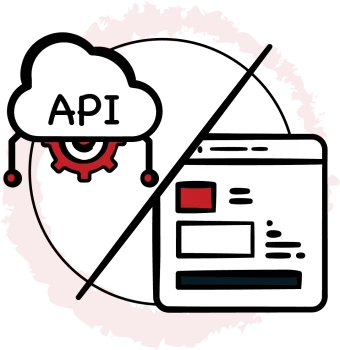
During web app testing, the team only covers the app itself, and any API calls that specific application makes. This can mean that, if your API has additional functionality beyond what the web interface uses, those untested endpoints remain vulnerable to attack.
During an API pentest, the pentesters will test all of the API calls associated with the API itself, and only test the aspects of the application that interact with the API. This may mean that there are some web app functionalities that are out-of-scope for an API test.
How Much does a Penetration Test Cost?
Pricing depends on what you’re testing, how complex it is, and how long it takes. We break down the key factors that influence cost so you can budget appropriately for your specific security needs.
Frequently
Asked
Questions
Have a question that isn’t answered here?
See our full FAQ page.
What is Secure Ideas' engagement process?
Every engagement starts with a scoping call with a senior consultant to estimate effort and define a fixed bid. From there, we finalize a Master Service Agreement (MSA) and Statement of Work (SOW), and then schedule the test. We’ll hold a kickoff call about two weeks out to introduce everyone.
After the start date, the pentesters execute the assessment. Most engagements run for between one and two weeks. The reporting phase follows this, with a draft delivered for your review before we issue the final version.
How much does a pentest cost?
Most pentests fall between $10,000 and $45,000, though the exact number depends on scope and rate. Scope covers the type, breadth, and depth of what’s being tested. The rate reflects consultant expertise, Secure Ideas bills at $340 per hour. Factors like travel, after-hours testing, attestation letters, and retesting can also affect the final quote.
Costs for PETaaS services are based on credits, which are explained in more detail on the PETaaS page.
What is the scope of a pentest?
The scope defines which systems, applications, or environments are included in a pentest, and how deep the testing goes on each asset. We can set the scope as narrow as a single web app, or as broadly as your entire external network. We typically set the scope during a scoping call, where a consultant works with you to prioritize your highest-risk assets, keep testing efficient, and avoid disrupting production systems.
How soon can we schedule a test?
Once a contract is signed and all agreements are finalized, we can typically schedule a test between two and four weeks out. Timing depends on consultant availability and how quickly scoping and contracting move, which means that starting the conversation early (ideally months ahead of a compliance deadline) helps avoid last-minute scrambling.
What sets Secure Ideas apart from other security consulting firms?
Our consultants bring decades of combined, hands-on experience across system administration, network architecture, and application development, not just testing checklists. We’re CREST-accredited, actively involved in the security community (SamuraiWTF, DerbyCon, DEF CON, and more), and focused on delivering practical, actionable findings rather than generic scan output.
What's the difference between a pentest and a vulnerability scan?
A pentest actively simulates real attacks to exploit vulnerabilities and gauge true risk.
A vulnerability scan is a passive, automated process that flags known issues by comparing your systems against existing databases.
Scanning should happen regularly, and provides areas for your team to investigate further; pentesting goes deeper and gives your team context and analysis that only a live tester can provide.
How long does a pentest take?
The active testing window usually runs three to ten days depending on scope. Including scoping, contracting, and reporting, a full engagement typically spans two to four weeks start to finish.
How often should my organization get pentested?
Most organizations test their apps and networks annually, or whenever a significant change occurs in their systems or applications.
Some specific regulations like PCI DSS may set firmer requirements. For example, PCI DSS requires at least an annual pentest, or one after any major environmental change.
What is Professionally Evil Testing as a Service (PETaaS®)?
PETaaS® is on-demand pentesting services, which provides you with continuous access to our penetration testing expertise rather than a one-time assessment. This approach offers on-demand or scheduled testing, which integrates with your software development lifecycle, and delivers regular vulnerability analysis with ongoing support. While it may initially appear more expensive than traditional testing, PETaaS® is significantly more cost-effective than hiring full-time security staff and provides proactive, real-time vulnerability identification.
Note: The industry lacks a standard definition for penetration testing as a service, so verify that your provider’s approach aligns with your expectations.
Secure Ideas is trusted by companies just like yours.
Recognized authority and trusted guidance built on years of uncovering risks for organizations like yours.
We’ve got roughly 10 years before quantum computers can break current encryption at scale. Sounds like plenty of time, right? Except large-scale cryptographic migrations take 5-7 years, and adversaries are already stockpiling your encrypted traffic to crack later. Our CEO Kevin Tackett breaks down the math, and your five-step prep plan.
Bypassing Browser PDF Security: Using Embedded JavaScript Forms for Social Engineering
A file upload field had already survived the usual bypasses. Then came a PDF with embedded JavaScript, and a browser that blocked the script but not everything else. What that gap made possible looked nothing like a phishing email, and everything like something the user already trusted. Here’s how far one blocked exploit can still go.